
Safe Ride? Analysis of Female Consumer Behavior in the Context of Brazilian Ride-hailing

Keywords:
On-demand mobility, Technology, Female consumer behaviorArticle Sidebar
Main Article Content
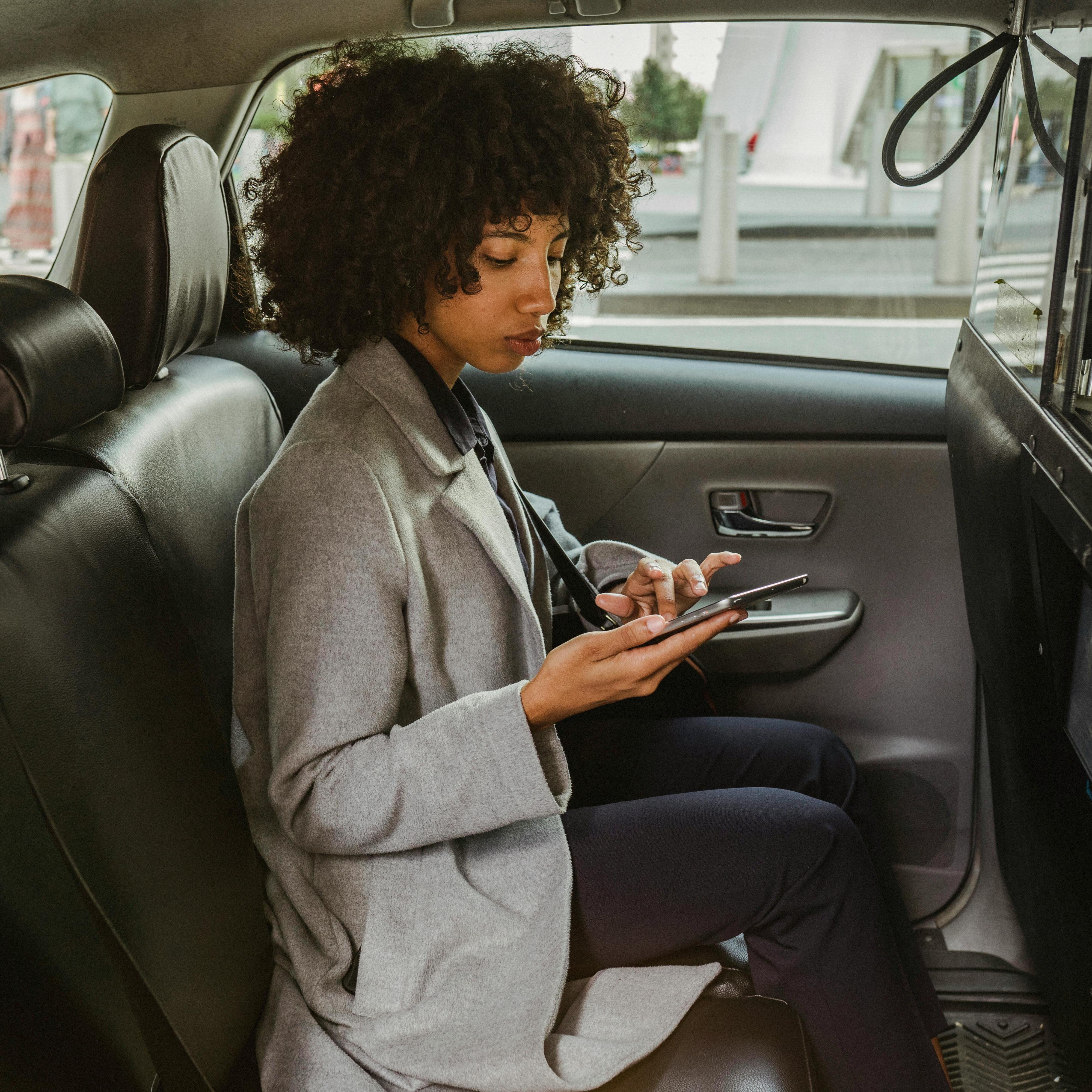
This study examines female consumption behavior in relation to ride-hailing services in Brazil, employing mixed methods to achieve a nationally representative sample. Findings emphasize the utilitarian and technological drivers of service use, which prevail over social and environmental considerations. Key factors such as physical violence, psychological violence, and self-preservation were found to be interdependent, leading to the development of an explanatory model of female consumption. While men and women share some foundational motivations for ride-hailing adoption, differences in the nature and timing of use generate distinct perceptions, shaping more flexible behavior among women. Environmental and social concerns remain secondary in decision-making; however, asymmetries related to violence and self-preservation become more pronounced during off-peak travel periods. Importantly, female consumption behavior is not static but varies according to contextual influences. These insights hold significant implications for future research and for organizations providing ride-hailing services, underscoring the necessity of adapting to the evolving needs of female users. This study establishes a benchmark in the analysis of female consumption behavior, challenging the notion of fixed determinants and highlighting the critical role of context and time of day in shaping decisions.
Agarwal, S., Charoenwong, B., Cheng, S., & Keppo, J. (2022). The impact of ride-hail surge factors on taxi bookings. Transportation Research Part C: Emerging Technologies, 136. https://doi.org/10.1016/j.trc.2021.103508 DOI: https://doi.org/10.1016/j.trc.2021.103508
Aguilera-García, Á., Gomez, J., Velázquez, G., & Vassallo, J. M. (2022). Ridesourcing vs. traditional taxi services: Understanding users’ choices and preferences in Spain. Transportation Research Part A: Policy and Practice, 155, 161–178. https://doi.org/10.1016/j.tra.2021.11.002 DOI: https://doi.org/10.1016/j.tra.2021.11.002
Bajaj, N., Steel, M., Ogden, S., & Rahman, K. (2020). Consumer motivations to create alternative consumption platforms. Australasian Marketing Journal (AMJ), 28(3), 50–57. https://doi.org/10.1016/j.ausmj.2020.06.001 DOI: https://doi.org/10.1016/j.ausmj.2020.06.001
Bezerra, I. D. S. C. (2021). Uberização do trabalho feminino: percurso histórico da violência de gênero no mundo do trabalho. Portal de Trabalhos Acadêmicos, 8(3). https://revistas.faculdadedamas.edu.br/index.php/academico/article/ view/1744
Brown, A., & LaValle, W. (2021). Hailing a change: Comparing taxi and ridehail service quality in Los Angeles. Transportation, 48(6). https://doi.org/10.1007/s11116-020-10086-z DOI: https://doi.org/10.1007/s11116-020-10086-z
Castiglione, J., Cooper, D., Sana, B., Tischler, D., Chang, T., Erhardt, G. D., Roy, S., Chen, M., & Mucci, A. (2018). TNCs & congestion (Civil Engineering Reports, No. 1). https://uknowledge.uky.edu/ce_reports/1
Chehri, A., & Mouftah, H. T. (2019). Autonomous vehicles in sustainable cities: The beginning of a green adventure. Sustainable Cities and Society, 51, 101751. https://doi.org/10.1016/j.scs.2019.101751 DOI: https://doi.org/10.1016/j.scs.2019.101751
Colodetti, A. P. O. A., & Melo, M. C. O. L. (2021). As relações de gênero no contexto socioeconômico e cultural brasileiro: Estudo com mulheres motoristas de aplicativos de mobilidade urbana. Cadernos EBAPE.BR, 19(4), 872–886. https://doi.org/10.1590/1679-39512020141 DOI: https://doi.org/10.1590/1679-39512020141
Costa, C. S., Sá, A. L. S., & Pitombo, C. (2021). Análise dos fatores que influenciam a utilização do ridesourcing no Brasil: Uma abordagem baseada no algoritmo Two-Step Cluster. 9º Congresso Luso-Brasileiro de Planejamento Urbano, Regional, Integrado e Sustentável (PLURIS 2021 Digital).
Curtis, S. K., & Mont, O. (2020). Sharing economy business models for sustainability. Journal of Cleaner Production, 266, 121519. https://doi.org/10.1016/j.jclepro.2020.121519 DOI: https://doi.org/10.1016/j.jclepro.2020.121519
Dias, F. F. (2021). Ride-hailing and travel demand implications. In R. Vickerman (Ed.), International Encyclopedia of Transportation (pp. 564–568). Elsevier. https://doi.org/10.1016/b978-0-08-102671-7.10384-7 DOI: https://doi.org/10.1016/B978-0-08-102671-7.10384-7
Dudley, G., Banister, D., & Schwanen, T. (2017). The rise of Uber and regulating the disruptive innovator. The Political Quarterly, 88, 492–499. https://doi.org/10.1111/1467-923X.12373 DOI: https://doi.org/10.1111/1467-923X.12373
Eckhardt, G. M., Houston, M. B., Jiang, B., Lamberton, C., Rindfleisch, A., & Zervas, G. (2019). Marketing in the sharing economy. Journal of Marketing, 83(5), 5–27. https://doi.org/10.1177/0022242919861929 DOI: https://doi.org/10.1177/0022242919861929
Feng, G., Kong, G., & Wang, Z. (2017). We are on the way: Analysis of on-demand ride-hailing systems. SSRN. https://doi.org/10.2139/ssrn.2960991 DOI: https://doi.org/10.2139/ssrn.2960991
FIA Foundation & CAF. (2017). Ella se mueve segura – She moves safely: A study on women’s personal security and public transport in three Latin American cities. https://www.fiafoundation.org/media/461162/ella-se-mueve-segura-she-moves-safely.pdf
Field, A., Miles, J., & Field, Z. (2012). Discovering statistics using R. Sage Publications.
Gardner, N., Cui, J., & Coiacetto, E. (2017). Harassment on public transport and its impacts on women’s travel behaviour. Australian Planner, 54(1), 8–15. https://doi.org/10.1080/07293682.2017.1299189 DOI: https://doi.org/10.1080/07293682.2017.1299189
Geissinger, A., Laurell, C., Öberg, C., Sandström, C., & Suseno, Y. (2020). Assessing user perceptions of the interplay between the sharing, access, platform and community‐based economies. Information Technology & People, 33(3), 1037–1051. https://doi.org/10.1108/ITP-12-2019-0649 DOI: https://doi.org/10.1108/ITP-12-2019-0649
Gekoski, A., Gray, J. M., Adler, J. R., & Horvath, M. A. H. (2017). The prevalence and nature of sexual harassment and assault against women and girls on public transport: An international review. Journal of Criminological Research, Policy and Practice, 3(1), 3–16. https://doi.org/10.1108/JCRPP-08-2016-0016 DOI: https://doi.org/10.1108/JCRPP-08-2016-0016
Hazan, J., Lang, N. Wegscheider, A.K., & Fassenot, B. (2019). On-Demand Transit Can Unlock Urban Mobility. https://www.bcg.com/pt-br/publications/2019/on-demand-transit-can-unlock-urban-mobility
Huston, C. (2017). Ride-hailing industry expected to grow eightfold to $285 billion by 2030. http://www.marketwatch.com/story/ride-hailing -industry-expected-to-grow-eightfold-to-285-billion-by-2030-2017-05-24
International Finance Corporation (IFC). (2018). Driving Toward Equality: Women, Ride-hailing and the Sharing Economy. https://www.ifc.org/wps/wcm/connect/ec101088-8a12-4994-9918-14455b8e2cd9/00418+IFC+DTE+Report Complete Layout+Final2-pxp.pdf?MOD = AJPERES
Lagos, V., Muñoz, Á., & Zulehner, C. (2019). Gender-specific benefits from ride-hailing apps: Evidence from Uber's entry in Chile. SSRN. https://doi.org/10.2139/ssrn.3370411 DOI: https://doi.org/10.2139/ssrn.3370411
Lavieri, P.S., & Bhat, C.R. (2019). Investigating objective and subjective factors influencing the adoption, frequency, and characteristics of ride-hailing trips. Transportation Research Part C: Emerging Technologies, 105, 100-125. https://doi.org/10.1016/j.trc.2019.05.037. DOI: https://doi.org/10.1016/j.trc.2019.05.037
Lesteven, G., & Samadzad, M. (2021). Ride-hailing, a new mode to commute? Evidence from Tehran, Iran. Travel Behaviour and Society, 22, 175–185. https://doi.org/10.1016/j.tbs.2020.09.006 DOI: https://doi.org/10.1016/j.tbs.2020.09.006
Liu, y., Gao, Q., & Rau, P.P. (2022). Chinese passengers’ security perceptions of ride-hailing services: An integrated approach combining general and situational perspectives. Travel Behaviour and Society. 26, 250–269. https://doi.org/10.1016/j.tbs.2021.10.009 DOI: https://doi.org/10.1016/j.tbs.2021.10.009
Martínez, D., Mitnik, O. A., Salgado, E., Scholl, L., & Yáñez-Pagans, P. (2018). Connecting to economic opportunity: The role of public transport in promoting women’s employment in Lima (IDB Technical Note). Inter-American Development Bank. DOI: https://doi.org/10.18235/0001528
Matos, D. A. S., & Rodrigues, E. C. (2019). Análise fatorial. Enap.
Miranda, F. C. D. (2020). Compartilhar para chegar: Fatores de escolha para usos de serviços de modalidade compartilhados e privados na cidade de São Paulo (Dissertação de Mestrado Profissional, ESPM).
Mitra, S.K., Bae, Y., & Ritchie, S.G. (2019). Use of Ride-hailing Services among Older Adults in the United States. Transportation Research Record, 2673, 700–710. https://doi.org/10.1177/0361198119835511 DOI: https://doi.org/10.1177/0361198119835511
Moody J, Esparza-Villarreal E, & Keith, D. (2021). Use of Exclusive and Pooled Ridehailing Services in Three Mexican Cities. Transportation Research Record. 2675 (9), 507-518. https://doi.org/10.1177/03611981211002835 DOI: https://doi.org/10.1177/03611981211002835
Mourad, A., Puchinger, J., & Chu, C. (2019). A survey of models and algorithms for optimizing shared mobility. Transportation Research Part B: Methodological, 123, 323–346. DOI: https://doi.org/10.1016/j.trb.2019.02.003
Nourani, F., Antonello, S. L., Govone, J. S., & Ceccato, V. (2020). Women and LGBTI youth at target: Assessing transit safety in Rio Claro, Brazil. En V. Ceccato & M. Nalla (Eds.), Crime and fear in public places: Towards safe, inclusive and sustainable cities (pp. 176–193). Routledge. DOI: https://doi.org/10.4324/9780429352775-12
Onu News. (2019). ONU prevê que cidades abriguem 70% da população mundial até 2050. https://news.un.org/pt/story/2019/02/1660701
Pereira, R. H. M., Warwar, L., Parga, J., Bazzo, J., Braga, C. K., Herszenhut, D., & Saraiva, M. (2021). Tendências e desigualdades da mobilidade urbana no Brasil I: o uso do transporte coletivo e individual. https://www.ipea.gov.br/portal/index.php?option=com_content&view=article&id=38324 DOI: https://doi.org/10.38116/td2673
Peters, D. (2013). Gender and sustainable urban mobility (Official Thematic Study for the 2013 UN Habitat Global Report on Human Settlements). UN-Habitat. https://doi.org/10.13140/RG.2
Qian, X., Lei, T., Xue, J., Lei, Z., & Ukkusuri, S. V. (2020). Impact of transportation network companies on urban congestion: Evidence from large-scale trajectory data. Sustainable Cities and Society, 55, 102053. https://doi.org/10.1016/j.scs.2020.102053 DOI: https://doi.org/10.1016/j.scs.2020.102053
Rangel, T., González, J. N., & Gomez, J. (2022). Exploring ride-hailing fares: An empirical analysis of the case of Madrid. Transportation, 49(2), 1–21. https://doi.org/10.1007/s11116-021-10180-w DOI: https://doi.org/10.1007/s11116-021-10180-w
Rayle, L., Dai, D., Chan, N., Cervero, R., & Shaheen, S. (2016). Just a better taxi? A survey-based comparison of taxis, transit, and ridesourcing services in San Francisco. Transport Policy, 45, 168–178. https://doi.org/10.1016/j.tranpol.2015.10.004 DOI: https://doi.org/10.1016/j.tranpol.2015.10.004
Sabogal-Cardona, O., Oviedo Hernandez, D., Scholl, L., & Crotte, A. (2021). Not my usual trip: Ride-hailing characterization in Mexico City. Travel Behaviour and Society, 25(2), 233–245. https://doi.org/10.1016/j.tbs.2021.07.010 DOI: https://doi.org/10.1016/j.tbs.2021.07.010
Sachan, S., Deb, S., & Singh, S. N. (2020). Different charging infrastructures along with smart charging strategies for electric vehicles. Sustainable Cities and Society, 60, 102238. https://doi.org/10.1016/j.scs.2020.102238 DOI: https://doi.org/10.1016/j.scs.2020.102238
Shaheen, S., Cohen, A., Randolph, M., Farrar, E., Davis, R., & Nichols, A. (2019). Manual de políticas de movilidad compartida. https://escholarship.org/uc/item/9678b4xs
Shi, K., Shao, R., De Vos, J., Cheng, L., & Witlox, F. (2021). The influence of ride-hailing on travel frequency and mode choice. Transportation Research Part D: Transport and Environment, 101, 103125. https://doi.org/10.1016/j.trd.2021.103125 DOI: https://doi.org/10.1016/j.trd.2021.103125
Silveira Neto, R., Duarte, G., & Páez, A. (2014). Gender and commuting time in São Paulo Metropolitan Region. Urban Studies, 52(2), 298–313. https://doi.org/10.1177/0042098014528392 DOI: https://doi.org/10.1177/0042098014528392
Soto Villagrán, P. (2019). Análisis de la movilidad, accesibilidad y seguridad de las mujeres en tres Centros de Transferencia Modal (CETRAM) de la Ciudad de México. Banco Interamericano de Desarrollo. https://doi.org/10.18235/0002122 DOI: https://doi.org/10.18235/0002122
Tafreshian, A., & Masoud, N. (2020). Trip-based graph partitioning in dynamic ridesharing. Transportation Research Part C: Emerging Technologies, 114, 532–553. https://doi.org/10.1016/j.trc.2020.02.008 DOI: https://doi.org/10.1016/j.trc.2020.02.008
Tun, E. H., Welle, B., Hidalgo, D., & Albuquerque, C. (2020). Servicios informales y semiformales en América Latina: Un panorama de las reformas del transporte público. Banco Interamericano de Desarrollo. https://doi.org/10.18235/0002831 DOI: https://doi.org/10.18235/0002831
Violin, F.L. (2020). Motivadores para el uso de Servicios de compartir vehículos bajo demanda en Brasil. Cuadernos del Cendes, 83-110. https://saber.ucv.ve/ojs/index.php/rev_cc/article/view/22657
Violin, F. L. (2021). Motivators for using on-demand vehicle sharing services in Brazil. Brazilian Business Review, 18(6), 643–661. https://doi.org/10.15728/bbr.2021.18.6.3 DOI: https://doi.org/10.15728/bbr.2021.18.6.3
Violin, F. L. (2022). Consumption inductors of displacement modes linked to ride-hailing in Brazil. Urbe. Revista Brasileira de Gestão Urbana, 14, e20210111. https://doi.org/10.1590/2175-3369.014.e20210111 DOI: https://doi.org/10.1590/2175-3369.014.e20210111
World Bank Group & UFGE. (2020). Why does she move? A study of women’s mobility in Latin American cities. https://openknowledge.worldbank.org/handle/10986/33466
Yong, A. G., & Pearce, S. (2013). A beginner’s guide to factor analysis: Focusing on exploratory factor analysis. Tutorials in Quantitative Methods for Psychology, 9(2), 79–94. https://doi.org/10.20982/tqmp.09.2.p079 DOI: https://doi.org/10.20982/tqmp.09.2.p079
Zhu, X., & Liu, K. (2021). A systematic review and future directions of the sharing economy: Business models, operational insights and environment-based utilities. Journal of Cleaner Production, 290, 125209. https://doi.org/10.1016/j.jclepro.2020.125209 DOI: https://doi.org/10.1016/j.jclepro.2020.125209
Downloads

This work is licensed under a Creative Commons Attribution-NonCommercial-NoDerivatives 4.0 International License.